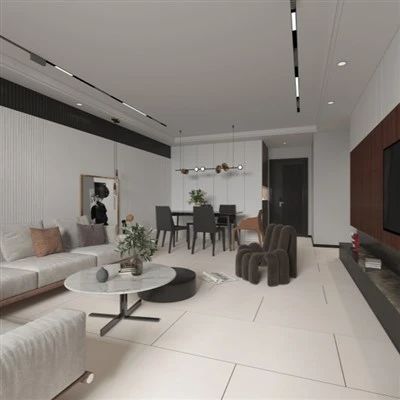
Marble has remained one of the most influential materials in architecture and interior design for centuries. However, natural marble is not always practical for large-scale residential and commercial projects because of its maintenance requirements, water absorption, weight, and cost. For this reason, marble tile has become an important product category for importers, distributors, wholesalers, contractors, developers, and project buyers around the world.
Modern porcelain and ceramic manufacturing technology makes it possible to reproduce the natural appearance of marble with highly detailed veining, realistic color transitions, and different surface finishes. For B2B buyers, marble tile offers more than decorative value. Product consistency, stable quality, flexible sizes, production capacity, packaging, and supply reliability are equally important when selecting a supplier.
As a tile manufacturer in Zibo, China, we understand that overseas buyers usually evaluate marble-look tile products from both design and business perspectives. This article explains the key factors global buyers should consider when sourcing marble tile from a factory for wholesale distribution and construction projects.
Why Marble-Look Tiles Continue to Be Popular
Natural marble creates a premium and timeless visual effect, but it also has limitations. It can require regular maintenance and may be more sensitive to staining and moisture depending on the type of stone. In contrast, porcelain marble-look tiles can provide a similar decorative appearance while offering more stable performance for everyday applications.
The popularity of marble-look products is also connected to their versatility. A single marble design can be developed into multiple sizes and finishes, allowing distributors and project buyers to build complete product collections. For example, the same design may be available for wall applications, floor applications, bathrooms, living rooms, hotel spaces, and commercial interiors.
For importers, this flexibility can help simplify product selection. Instead of sourcing completely different visual styles for different projects, buyers can develop coordinated collections based on several marble-inspired designs.
Another important advantage is design consistency. Natural marble varies from one piece to another, while manufactured tiles can maintain more controlled colors and patterns during production. This is especially important for large projects requiring thousands of square meters of material.
Understanding Different Types of Marble Tile
When sourcing marble tile, buyers should first understand that marble-look products are not all produced in the same way. Material, surface finish, size, and production technology can significantly affect product positioning.
Polished Marble-Look Tile
Polished surfaces are commonly used for premium residential interiors, hotel lobbies, commercial spaces, and decorative wall applications. The reflective surface can enhance the depth of the marble pattern and create a brighter visual effect.
For distributors, polished marble-look tiles are often suitable for markets where customers prefer elegant and luxurious interiors. However, buyers should also consider packaging and transportation carefully because polished surfaces require proper protection to reduce the risk of scratching during loading and delivery.
Matte Marble-Look Tile
Matte marble-look tiles provide a softer and more natural appearance. They are increasingly used in modern residential projects, commercial interiors, and spaces where a low-gloss surface is preferred.
Compared with polished products, matte tiles can create a more understated design style. They are also suitable for combining with other popular tile categories, including stone-look tiles, wood-look tiles, and concrete-look tiles.
For wholesalers, offering both polished and matte options can help cover different market preferences without completely changing the overall product collection.
Large Format Marble Tile
Large format products have become increasingly important in modern construction and interior projects. Larger tiles can reduce the number of visible grout lines and create a more continuous marble appearance.
Common applications include living rooms, hotel spaces, commercial projects, villa interiors, and large wall surfaces. However, large format products also require buyers to consider transportation, container loading, installation requirements, and local handling conditions.
A reliable marble tile manufacturer should be able to provide clear information about available sizes, thickness, packing quantities, and loading recommendations before an order is confirmed.
What B2B Buyers Should Check Before Purchasing
For overseas buyers, visual appearance is only one part of the sourcing process. A tile that looks attractive in a sample may still create problems if the factory cannot maintain stable quality during mass production.
Color and Design Consistency
Marble-look designs often contain multiple colors, veins, and tonal variations. During mass production, the overall appearance should remain consistent enough for distributors and projects.
Buyers should confirm whether the factory can provide samples from the same production standard as the final order. It is also useful to discuss shade variation and design patterns before production begins.
For large orders, production consistency is particularly important. Importers should avoid receiving products with significant differences between different batches when the tiles are intended for the same market or project.
Water Absorption and Material Performance
Porcelain-based marble-look tiles are widely selected for projects because of their stable physical performance. Depending on the specific product and application, buyers may evaluate water absorption, wear resistance, surface hardness, and other technical characteristics.
Different markets may also have different product standards. Therefore, importers should communicate clearly with suppliers about their target market and intended application.
A product suitable for a residential wall may not require exactly the same performance characteristics as a commercial floor product. Understanding the final application helps buyers select the right product instead of focusing only on appearance.
Surface Quality
Surface quality is one of the most important inspection points for marble tile. Buyers should check the clarity of the pattern, glaze quality, edge finishing, flatness, and overall appearance.
For polished products, surface reflection and protection are important. For matte products, buyers should evaluate whether the surface texture is consistent and whether the final appearance matches the approved sample.
A professional factory should have a quality control process covering production, sorting, packing, and loading.
Size Accuracy and Flatness
Size accuracy becomes especially important when tiles are used for large projects or when buyers expect narrow grout lines.
Inconsistent dimensions can increase installation difficulty and create additional complaints from contractors or end customers. Flatness is also important, particularly for larger sizes.
B2B buyers should request detailed product specifications and confirm acceptable tolerances before placing large-volume orders.
Selecting the Right Marble Designs for Your Market
The global market for marble-look products is diverse. A design that performs well in one country may not have the same demand in another market.
White marble-look tiles remain popular because they can be used in many different interior styles. White and light gray backgrounds with soft veining are commonly selected for residential projects, bathrooms, kitchens, and commercial spaces.
Gray marble-look tiles are often used in contemporary interiors. They can provide a modern appearance while remaining relatively neutral and easy to combine with furniture and other materials.
Beige and warm-tone marble designs are suitable for markets that prefer natural and comfortable interior environments. These products can be used in residential spaces, hotels, and hospitality projects.
Dark marble-look designs can help distributors create premium collections. Black, dark gray, and deep brown marble patterns are often used for feature walls, luxury interiors, and selected commercial applications.
For importers, it is usually more practical to develop a balanced collection rather than purchasing too many similar designs. A combination of light, gray, warm, and dark products can provide more flexibility for distributors and local customers.
Why Factory Production Experience Matters
When purchasing from a marble tile factory, production experience can directly affect order stability. Export buyers usually need more than a supplier that can simply produce a product sample. They need a manufacturer that understands bulk orders, packaging, quality control, shipping schedules, and international communication.
A factory should be able to support buyers during several stages of the purchasing process.
The first stage is product selection. Buyers may need recommendations based on their market positioning, price level, preferred sizes, and customer demand.
The second stage is sample confirmation. Before mass production, product appearance, finish, specifications, and packaging requirements should be clearly discussed.
The third stage is production management. During production, the factory should maintain stable standards and conduct quality checks.
The final stage is packaging and shipment. Tiles are fragile products that require suitable protection during transportation. Packaging should help protect edges and surfaces while also supporting efficient container loading.
For our export business, we understand that overseas customers may purchase products for long-distance transportation. Internal plastic corner protectors and outer neutral cartons can be used to protect products according to packaging requirements, while loading methods can be adjusted based on different order conditions.
Packaging and Container Loading Considerations
Packaging is often underestimated when buyers first compare tile suppliers. However, poor packaging can lead to damage during transportation and affect the buyer's final profit.
Marble-look tiles, especially polished products and large formats, require careful protection. Buyers should discuss carton strength, corner protection, pallet requirements, and container loading methods before shipment.
Container utilization is another important factor. Different tile sizes have different packing quantities and weights. Buyers should work with suppliers to understand how many square meters can be loaded into a container based on product specifications.
Efficient loading can help importers manage shipping costs, while reasonable packaging can reduce the risk of damage during transportation.
For regular export orders, clear packing information should include tile size, quantity per carton, carton weight, pallet requirements if applicable, and total loading quantity.
Customization Opportunities for Distributors
Many distributors want products that are different from standard market offerings. Depending on the factory's capabilities and order quantity, customization may include sizes, surface finishes, packaging, and selected design requirements.
Customized packaging can be useful for distributors developing their own brands. However, buyers should consider minimum order quantities and production requirements before finalizing customized orders.
Product customization should also be practical. Instead of creating too many unique products with limited demand, distributors may achieve better results by developing a focused collection based on popular marble patterns and commercially suitable sizes.
A manufacturer with export experience can help buyers balance customization requirements with production efficiency.
Building a Long-Term Marble Tile Supply Strategy
For wholesalers and importers, purchasing tiles should not focus only on the lowest unit price. A lower price may not provide the best value if product consistency, packaging, communication, or delivery reliability are weak.
A long-term sourcing strategy should consider several factors, including product quality, stable production, market demand, available designs, delivery time, export experience, and communication efficiency.
Working with a stable supplier can also help buyers build more consistent product collections. When a distributor develops a successful marble-look series, the ability to reorder similar products becomes important.
Buyers should also avoid changing suppliers too frequently for the same product category unless there is a clear business reason. Stable cooperation can make it easier to maintain product standards and reduce communication costs.
Conclusion
Marble tile remains an important category in the global ceramic and porcelain tile market because it combines classic marble aesthetics with the practical advantages of modern manufacturing. For distributors, importers, contractors, and project buyers, the right product selection can support residential, commercial, and hospitality applications.
When sourcing marble tile, B2B buyers should evaluate more than appearance. Material performance, design consistency, size accuracy, surface quality, packaging, production capacity, and export experience all play important roles in the final purchasing decision.
As a Zibo-based tile manufacturer focused on international markets, we believe successful cooperation begins with understanding the buyer's market and product requirements. Whether customers are building a new marble-look collection, purchasing products for wholesale distribution, or sourcing tiles for construction projects, stable quality and practical supply support are essential.
With the continued development of printing technology, surface treatment, and large-format production, marble tile will continue to offer global B2B buyers flexible opportunities for different market segments. By working with an experienced manufacturer and selecting products based on real market demand, importers and distributors can develop more competitive and sustainable tile collections.

China Ceramic Tile Manufacturer
Golden State Ceramics has been deeply rooted in the ceramic industry for nearly two decades, collaborating with clients from over 50 countries to provide tailored ceramic tile solutions for diverse regional markets. In recent years, we have remained committed to staying ahead of market trends, developing more competitive products to meet the evolving needs of our global clientele.