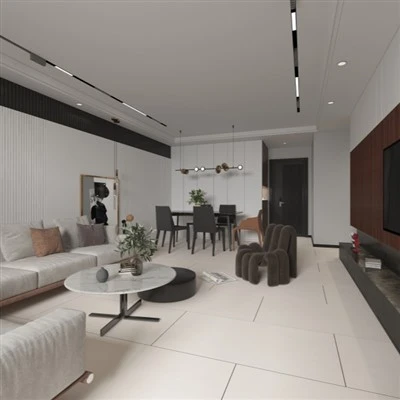
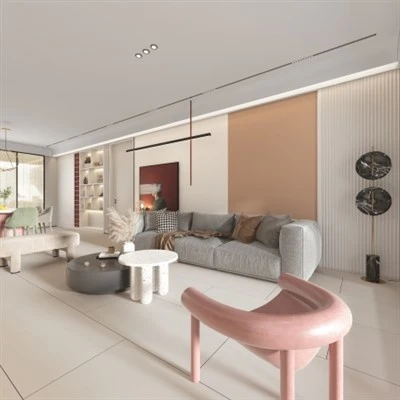
The Allure of White Tiles
The greatest appeal of white tiles lies in their space-enhancing effect. One homeowner who lived with white tiles for three years put it simply: "Even though my neighbour's place has higher ceilings, my home still looks brighter the moment you walk in." For compact apartments or rooms with limited natural light, white tiles create an airy, open feel that's hard to achieve with darker surfaces.
In terms of style, white tiles are remarkably versatile. They blend seamlessly into almost any aesthetic – from Scandinavian minimalism and Japanese naturalism to light French romance. They serve as the perfect blank canvas, letting your furnishings and décor take centre stage.
From a maintenance perspective, modern white tiles benefit from mature glazing technology that makes them waterproof, durable, and stain-resistant. One user noted that even in a sudden washing machine leak, the tiles held up far better than wood flooring would have.
The Reality Check – Challenges You Can't Ignore
The most common complaint about white tiles? They show dirt. A real user admitted: "White shows everything – if I don't clean for three days, it's painfully obvious." Footprints, stray hairs, and water spots all stand out starkly against a white background.
Additionally, an all-white space can feel cold and sterile. Designers point out that pure white rooms lack warmth – even a little clutter can make the space look messy and chaotic.
Over time, scuff marks and yellowing may become issues, particularly with lower-quality white tiles. Cheap ones tend to lose their lustre faster. Dark scratches also show up far more clearly on white surfaces.
How to Choose the Right "White" – Avoiding Common Pitfalls
1. Understand the Undertones
The same white tile can look completely different in a showroom vs. your home. Always take samples home and view them under your actual lighting conditions.
Warm creamy whites → suit cream-style or wabi-sabi interiors
Cool greyish whites → better for modern minimalist spaces
When reviewing test reports, pay close attention to water absorption. Fully vitrified white tiles should have an absorption rate of ≤0.5% – or even lower for premium quality.
2. Don't Judge by the Body Colour Alone
A common myth claims "whiter body means better quality" – but that's not necessarily true. While Guangdong-produced tiles tend to have lighter-coloured bodies due to lower iron content in raw materials, tiles from Jiangxi or Shandong may have redder or darker bodies – without compromising quality.
For example, one user purchased a well-known brand whose tiles were criticised online for having a reddish body – yet the tiles performed excellently in actual use. Quality depends more on production technology and quality control. Pay attention to implementation standards (such as Appendix G) and 3C certification – these are more reliable indicators than body colour.
3. Test Slip Resistance & Wear Resistance
For kitchen and bathroom floors, always test slip resistance – wet and dry zones have different requirements. Use a key to gently scratch the glazed surface to test wear resistance. A quality white tile should show no visible marks.
Styling & Maintenance – Bringing White Tiles to Life
The biggest risk with an all-white space is boredom and coldness. Use furniture and soft furnishings to introduce warmth and contrast:
A brown or caramel sofa balances the lightness of white walls and floors
Black cushions create visual focal points
Wood tones and rattan elements add natural warmth
Colour-matched grout is essential for achieving that seamless, monolithic look – but ensure the shade coordinates perfectly with your tiles.
For daily cleaning, a robot vacuum is a white tile's best friend. Grout lines should be sealed with epoxy-based grout to prevent blackening and mould growth. For stubborn stains, use a neutral detergent – avoid frequent use of strong acids or alkalis that can damage the glaze.
Final Reflection
White tiles are like a blank canvas – they can produce the most beautiful picture, but even a small flaw can ruin the effect. The key is choosing the right shade of white and caring for it thoughtfully. As one designer wisely put it, true white design "isn't really white" – it's about finding subtle layers within the palette. That's where sophistication truly lies.