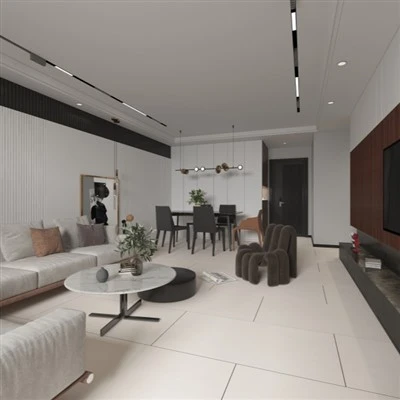
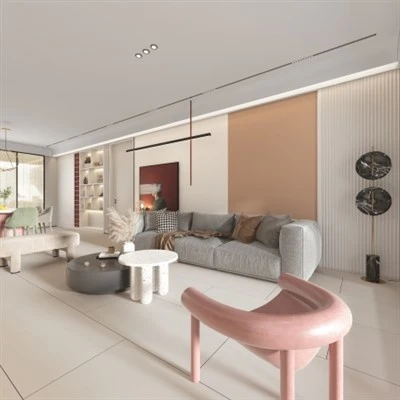
Throughout the long history of home decoration, the surface glossiness of ceramic tiles has always been a focal point of attention. From the early pursuit of mirror-like polished tiles and fully glazed tiles to the now highly favored matt tiles, this shift is not merely a change in aesthetics, but a profound transformation in living philosophy-from "showing off" to "pleasing oneself." Matte tiles, with their unique texture and intrinsic quality, have become synonymous with contemporary quality living.
I. What Are Matte Tiles?
Simply put, this tiles refer to ceramic products with low surface glossiness (typically below 15°). Rather than relying on intense reflections to catch the eye, they present a soft, understated, and warmly jade-like visual effect through delicate glazing techniques or the natural texture of the material itself. This "low-reflection" characteristic sets them apart from the harsh glare and coldness of traditional high-gloss tiles, bringing them closer to the raw, natural textures of materials like stone, cement, and wood.
II. Core Advantages of Matte Tiles: More Than Just Aesthetics
Visual Comfort, Eye-Friendly Choice
This is the most notable advantage of matt tiles. High-gloss tiles tend to create glare under lighting or natural sunlight, causing visual fatigue over prolonged exposure. In contrast, matt tiles diffusely reflect light, resulting in soft, non-dazzling illumination. This is especially beneficial for households with elderly or children, fostering a calm and relaxing home atmosphere.
Superior Texture, A Tasteful Choice
The "premium feel" of matte tiles stems from their rich surface treatment technologies. Whether it's the subtle granular touch from semi-polished dry grain, the three-dimensional textures created by mold embossing, or the silky smoothness of candy glaze or satin glaze, these techniques endow the tiles with depth and dimension beyond a flat image. They effortlessly complement various design styles such as modern minimalism, wabi-sabi, industrial, and neo-Chinese, lending spaces a sense of composure and elegance.
Wear-Resistant, Stain-Resistant, and Practical
Many worry that matt tiles are difficult to maintain-a common misconception. In fact, high-quality matt tiles feature glazed surfaces fired at high temperatures, achieving a Mohs hardness of typically 5–7, making them more scratch-resistant than ordinary high-gloss tiles. Moreover, since there is no high-gloss layer to reflect stains, everyday dust and footprints are actually less visible than on glossy tiles. As long as you choose products with adequate stain resistance (e.g., using nano anti-stain glazes), routine cleaning with a damp mop is effortless.
Slip-Resistant and Safe, Protecting Your Family
Compared to the smooth surfaces of high-gloss tiles, this tiles offer a higher friction coefficient and better slip resistance. This is particularly important for wet areas such as bathrooms, kitchens, and balconies, effectively reducing the risk of slips and falls-a crucial safety feature for households with elderly members and young children.
III. How to Choose a Good Matte Tile?
With a plethora of products on the market, consumers can consider the following points:
Check Gloss Level: A truly high-quality matte tile should have a gloss level below 10°. Visually, it should appear uniformly soft, like frosted glass, rather than having localized shiny spots or an overly oily sheen.
Feel the Surface Texture: A good matte tile feels smooth and refined to the touch, without harsh or rough grains. Run your fingers back and forth across the surface to assess its flatness and delicacy.
Test Stain Resistance: Write on the tile surface with an oily marker pen, wait a few minutes, and then wipe with a damp cloth. If it cleans off easily without leaving marks, the stain resistance is good.
Inquire About Water Absorption Rate: The lower the water absorption rate, the denser and more stable the tile quality. It is recommended to choose porcelain matte tiles with a water absorption rate below 0.5%, which are more suitable for underfloor heating systems.
Choose the Right Style and Size: For small apartments, consider rectangular matte tiles in 600x1200mm or 750x1500mm to visually extend the space. For large flats or villas, you can opt for even larger sizes like 900x1800mm to minimize grout lines and enhance the sense of grandeur. In terms of color, beige, light gray, and cream tones are universally versatile, while dark gray and black offer more personality and a touch of mystery.
IV. Suggested Application Scenarios
Living Room: Large-area installation of light-colored matt tiles, paired with a main-light-free design, creates a minimalist, airy, and layered public space.
Bedroom: Choose wood-grain matt tiles or micro-cement effect matte tiles to foster a warm and tranquil sleeping environment.
Bathroom: It is recommended to use fine-matte or textured-surface tiles with better slip resistance. Combined with grout in a matching color, this achieves a seamless, high-end monolithic look.
Kitchen: For walls, choose smooth matt tiles that are easy to clean (such as satin glaze), while using slip-resistant matte tiles for the floor.
Conclusion
The popularity of matte tiles signifies a maturation and rationalization in home aesthetics. No longer blindly chasing superficial shine, they return to the warmth and texture of the materials themselves, infusing living spaces with a quiet strength. Choosing matt tiles means choosing a lifestyle that is understated, comfortable, and tasteful. In the future trends of home renovation, they will undoubtedly continue to hold a significant and esteemed position.