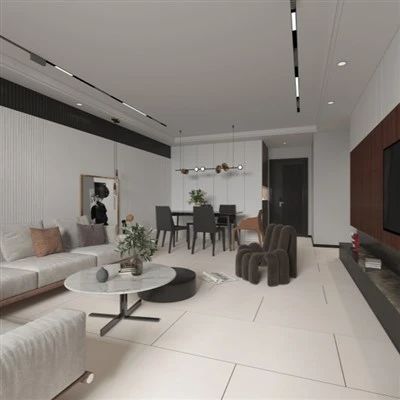
Complete Guide to Selecting and Installing Ceramic Floor and Wall Tiles: From Material Choice to Maintenance, This One Article Is All You Need
Ceramic floor and wall tiles are among the most widely used and visually impactful materials in home decoration, yet many people confuse the two. In reality, floor tiles are meant for the ground-they require wear resistance, slip resistance, and high compressive strength, with a water absorption rate generally no more than 0.5%. Wall tiles are meant for walls, with greater emphasis on decorative appeal and easy cleaning, and their water absorption rate typically falls between 3% and 10%. A particularly important point: floor tiles should not be directly installed on walls, as they are highly prone to hollowing and falling off; special tile adhesive must be used to ensure a firm bond.
Common types of tiles on the market each have their own strengths. Polished tiles have a shiny surface, high hardness, and good wear resistance, making them suitable for living rooms and hallways, though their slip resistance is only average. Glazed polished tiles offer rich patterns and lifelike textures, suitable for living rooms, bedrooms, and even accent walls, but their wear resistance is slightly inferior, so they need protection from hard objects scratching them. Full-body tiles are uniform in color and texture from surface to core, wear-resistant and slip-resistant, making them an excellent choice for balconies and kitchen floors, especially where chamfering and grooving are needed. Antiqued tiles have a matte finish, are slip- and stain-resistant, and carry a vintage aesthetic, making them suitable for bathrooms and entryways. As for ceramic mosaic tiles, they are light, thin, and inexpensive, specifically designed for kitchen and bathroom walls, and must never be used on floors.
When selecting tiles, focusing on four key indicators can help you avoid common pitfalls. For water absorption, choose ≤0.5% for floor tiles and 3%–10% for wall tiles. For flatness, lay out several pieces on site to check whether edges align and gaps are even. For abrasion resistance, lightly scratch the back of a sample with a key; if no marks remain, the Mohs hardness is at least 7. For slip resistance, kitchen and bathroom floors should be rated R9 or above, while shower areas should ideally reach R11. In addition, even tiles from the same batch may have slight color variations, so it is wise to buy a few extra boxes as backup to avoid being unable to find the same batch later.
The installation process is critical to the final result. Regardless of the tile type, grout joints must be left-typically 1.5 mm to 3 mm-to allow for thermal expansion and contraction and prevent warping or cracking. Ceramic mosaic wall tiles should be fully soaked in water before installation until bubbles stop rising; otherwise, they will absorb moisture from the cement, leading to hollowing. In bathrooms, the wall-over-floor installation method is recommended, where wall tiles overlap floor tiles to create a natural slope for drainage, effectively preventing water seepage and mildew. For outside corners, a 45‑degree miter joint is preferable to angle trim strips for a cleaner look, though it requires greater skill from the installer.
With proper daily maintenance, tiles can stay looking new for many years. For dust removal, use a soft-bristle broom or a vacuum cleaner with a soft brush attachment to avoid sand particles scratching the glaze. For stain removal, use a neutral cleaner and a soft cloth; never use steel wool or strong acid/alkaline cleaners, as these will directly damage the glaze's luster. If mold appears in the grout lines, treat it with a mold remover spray or redo the joints entirely with epoxy resin-based color sand grout, which resists yellowing and is waterproof. When moving furniture, always lift it rather than drag it, and place a doormat at the entrance to reduce the amount of sand and grit tracked in.
Finally, keep these key pitfalls in mind: do not be swayed solely by discounted tiles, as many are old stock with outdated batches, significant color variation, and little after-sales support. For standard layouts, allow 5%–8% extra for cutting waste; for irregular layouts, reserve 15%. It is better to buy a few extra boxes than to take risks. After installation, tap each tile to check for hollow sounds; if any are uneven or have chipped edges, redo them immediately-it is far more troublesome to fix after you have moved in. There is no single "best" tile, only the option that best fits your lifestyle, habits, and budget. Nail both the material selection and the installation, and your home will truly stand the test of time, cooking fumes, and daily wear.