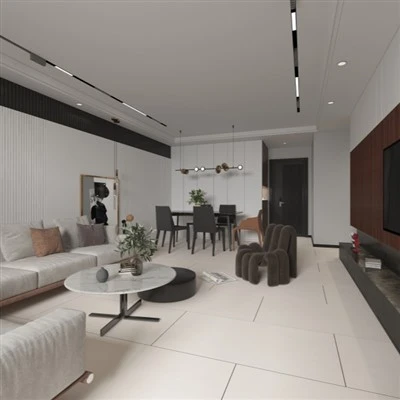
Marble tiles continue to be an important product category in the global ceramic tile market. For importers, distributors, wholesalers, developers, and project contractors, marble-look ceramic and porcelain tiles offer a combination of decorative appeal, stable performance, and scalable supply. Unlike natural marble, modern marble-look tiles can reproduce detailed stone patterns while providing more consistent specifications and easier maintenance.
As a tile manufacturer in Zibo, China, we understand that international B2B buyers focus on more than appearance when sourcing marble tiles. Product consistency, available sizes, surface options, loading capacity, packaging, production lead time, and long-term supply are also important factors. This article provides practical information for buyers sourcing marble-look tiles from China and explains how to select suitable products for different markets and projects.
What Are Marble Tiles?
In the ceramic tile industry, marble tiles usually refer to ceramic or porcelain tiles designed with marble-inspired patterns. These tiles reproduce the veins, colors, and visual characteristics of natural marble through advanced digital printing and surface treatment technologies.
Popular marble-look designs include:
Calacatta-inspired patterns
Carrara-inspired patterns
White marble patterns
Gray marble patterns
Beige and cream marble patterns
Dark marble patterns
Gold and dramatic vein designs
The market offers a wide range of choices, allowing distributors and project buyers to select products according to local design trends and customer preferences.
For B2B buyers, marble-look tiles provide an important advantage: the same design can usually be supplied in large quantities with relatively consistent color, size, and technical specifications. This makes them suitable for wholesale distribution and large construction projects.
Why Marble Tiles Remain Popular in International Markets
Natural marble has always been associated with elegant architecture and interior design. However, natural stone may have differences in color, veining, thickness, and maintenance requirements. Marble tiles provide a more standardized alternative while maintaining the visual appeal of natural stone.
One major advantage is design flexibility. Marble-look tiles can be produced in different sizes and finishes, allowing buyers to create complete product collections for residential and commercial applications. A distributor can offer polished marble-look tiles for premium interior projects while also providing matte or textured versions for practical spaces.
Another important factor is durability. Porcelain marble-look tiles generally offer good wear resistance, low water absorption, and long service life. This makes them suitable for markets where buyers require decorative products with reliable technical performance.
For importers, marble tiles can also support product diversification. Instead of stocking only one type of white marble design, buyers can build a complete collection including light colors, dark colors, dramatic veins, subtle patterns, and different surface finishes.
Choosing Between Ceramic and Porcelain Marble Tiles
Before placing an order, B2B buyers should understand the difference between ceramic and porcelain products.
Ceramic marble-look tiles are widely used for wall applications and certain indoor floor applications. They can provide attractive designs at competitive price levels and are suitable for many residential and commercial markets.
Porcelain marble-look tiles generally have lower water absorption and higher density. They are commonly selected for floor applications, bathrooms, kitchens, commercial spaces, and other areas where stronger performance is required.
The right choice depends on the target market and application. Importers should not focus only on price. A lower-priced product may be suitable for one market but may not meet the performance expectations of another.
When sourcing from a marble tile manufacturer, buyers should clearly communicate the intended application. The supplier can then recommend suitable materials, thicknesses, surfaces, and technical specifications.
Popular Sizes for Marble-Look Tile Collections
Size selection is an important part of product planning. Different markets have different preferences, and buyers should consider both design trends and logistics efficiency.
Common sizes include traditional formats for residential projects as well as larger formats for modern interiors. Large-format marble tiles are increasingly used in hotels, apartments, shopping spaces, offices, and high-end residential projects because fewer grout lines can create a more continuous marble appearance.
Smaller and medium-sized formats remain important for distributors because they are easier to use in different room sizes and renovation projects.
When selecting sizes, buyers should consider:
Product positioning, target application, local market demand, container loading efficiency, installation habits, and inventory management.
For distributors, a practical approach is to build a focused collection rather than purchasing too many sizes for every design. Several carefully selected sizes can reduce inventory complexity while meeting the needs of most customers.
Surface Finish Makes a Significant Difference
Surface finish can change both the appearance and application of marble-look tiles.
Polished surfaces are popular because they enhance the depth of marble patterns and create a bright, elegant appearance. They are often selected for living rooms, hotel lobbies, apartments, and other interior spaces.
Matte surfaces provide a softer and more natural appearance. They are suitable for modern residential interiors and commercial environments where a less reflective surface is preferred.
Textured or special anti-slip surfaces may be used for applications requiring additional slip resistance. Bathrooms, entrance areas, balconies, and certain commercial spaces may require products with more suitable surface performance.
For a marble tile supplier, offering different finishes based on the same or similar design can help B2B buyers create more complete product ranges.
How to Evaluate Marble Tile Design Quality
Appearance is one of the first things customers notice, but professional buyers should evaluate more than the overall pattern.
A high-quality marble-look design should have natural-looking veins and balanced color transitions. Patterns that are too repetitive may look artificial after installation, especially in large spaces.
Buyers should also review the variation between different faces or patterns. Multiple random faces can help create a more natural appearance when the tiles are installed over a large area.
Color consistency is equally important for wholesale and project orders. Importers need products that can maintain stable appearance from batch to batch, particularly when repeat orders are expected.
Before confirming a large order, buyers should request clear product information, sample images, and, when possible, actual samples. This helps reduce misunderstandings about color, surface finish, and pattern details.
Marble Tiles for Residential Applications
Residential construction remains an important market for marble tiles. Marble-look products can be used in living rooms, bedrooms, kitchens, bathrooms, hallways, and other interior spaces.
White and light gray marble patterns are popular for creating bright and clean interiors. Beige and warm-toned designs can provide a softer atmosphere, while darker marble patterns can create stronger visual contrast.
For residential distributors, product selection should consider the design preferences of the local market. Some markets prefer simple and subtle veins, while others have stronger demand for dramatic Calacatta-style patterns.
A balanced marble-look collection can include several color groups and surface options without creating excessive inventory.
Marble Tiles for Commercial Projects
Commercial projects often have different requirements from residential customers. Product consistency, quantity availability, technical performance, and delivery schedules are particularly important.
Hotels may require elegant large-format marble-look tiles for lobbies and public spaces. Office projects may prefer neutral gray or beige designs. Retail spaces may require durable floor tiles with designs that match the overall interior concept.
For project buyers, communication with the supplier should begin early. Important information includes total quantity, application area, size requirements, surface finish, packaging requirements, and delivery schedule.
Working directly with a marble tile manufacturer can make it easier to coordinate production and provide stable product specifications for large orders.
What B2B Buyers Should Check Before Ordering
Before confirming a marble tile order, buyers should evaluate several key factors.
First, confirm the product specifications. Size, thickness, material, surface finish, water absorption, and other technical information should be clearly understood.
Second, check dimensional consistency. Tiles used for large projects should maintain stable sizing and good flatness to support efficient installation.
Third, review packaging. Ceramic and porcelain tiles require reliable protection during long-distance transportation. Proper internal protection and strong outer cartons can help reduce damage during loading and shipping.
Fourth, confirm the production schedule. Stock products and customized products may have different delivery times. Buyers should communicate their purchasing schedule in advance.
Finally, consider repeat-order capability. For distributors and long-term projects, a supplier should be able to provide stable production and continued support for important product designs.
Sourcing Marble Tiles from China
China remains an important sourcing location for the global ceramic tile industry. Buyers can access a wide range of marble-look designs, sizes, and product categories.
However, choosing a supplier should not depend only on product catalogs. Professional B2B buyers should understand the manufacturer's production capability, quality control process, export experience, and communication efficiency.
Zibo is one of the established ceramic production areas in China and has a mature supply chain for tile manufacturing and export. Buyers sourcing from this region can find different product styles and manufacturing capabilities.
When working with a Chinese supplier, clear communication is essential. Buyers should provide detailed requirements instead of only sending a product picture. Information about target markets, applications, required quantity, preferred sizes, and quality expectations can help the manufacturer recommend more suitable products.
Building a Competitive Marble Tile Collection
For distributors and wholesalers, product selection should be based on market demand rather than simply choosing the largest possible number of designs.
A practical collection can include several core categories. Light marble designs can meet mainstream residential demand. Gray and beige designs can provide versatile options for different interior styles. Premium white marble patterns with stronger veins can support higher-value projects.
Surface options can also create additional selling opportunities. Polished products may target premium interior markets, while matte products can support modern and practical design applications.
The goal is to create a collection that is easy to manage, easy to reorder, and suitable for different customer groups.
Customization and OEM Opportunities
Some B2B buyers require products that are different from standard factory collections. Depending on the order quantity and production requirements, customization may include packaging, product labeling, size selection, and other export-related requirements.
Private-label packaging can be particularly useful for distributors building their own brands. Clear communication about carton design, labels, and loading requirements should take place before production begins.
Customization should always be evaluated based on practical production conditions. Buyers should discuss minimum order quantities, production schedules, and packaging requirements with the supplier before confirming a project.
Long-Term Cooperation with a Marble Tile Supplier
For many international buyers, long-term cooperation is more valuable than finding the lowest price for a single order.
A reliable supplier should understand the buyer's market and provide consistent support for product selection, samples, production, packaging, loading, and after-sales communication.
Stable cooperation can also help buyers manage inventory and repeat orders more effectively. When a product becomes successful in the market, the ability to continue supplying similar specifications becomes an important business advantage.
For this reason, B2B buyers should evaluate the overall cooperation capability of a supplier rather than comparing prices alone.
Conclusion
Marble tiles remain a strong product category for international distributors, importers, wholesalers, developers, and project buyers. With a wide range of designs, sizes, finishes, and applications, marble-look ceramic and porcelain tiles can meet different market demands while providing more standardized production than natural stone.
When sourcing marble tiles, buyers should consider design quality, material, surface finish, size, technical performance, packaging, production capability, and long-term supply. A clear understanding of the target market can help buyers build a more competitive and manageable product collection.
For overseas B2B customers, working with an experienced Chinese manufacturer can provide access to flexible marble-look tile options and export-oriented supply support. As a tile manufacturer based in Zibo, China, we focus on providing suitable ceramic and porcelain tile solutions for international markets and helping buyers select products based on practical business and project requirements.
Whether the goal is wholesale distribution, residential development, hotel projects, or commercial construction, the right marble tiles can combine natural stone aesthetics with reliable ceramic performance and support long-term market development.

China Ceramic Tile Manufacturer
Golden State Ceramics has been deeply rooted in the ceramic industry for nearly two decades, collaborating with clients from over 50 countries to provide tailored ceramic tile solutions for diverse regional markets. In recent years, we have remained committed to staying ahead of market trends, developing more competitive products to meet the evolving needs of our global clientele.