How to Choose Tiles: Light or Dark Colors? Here's the Right Way to Match Them (Many Get It Wrong)
Tiles are an essential material for home renovations, particularly for creating a stylish and sophisticated look in living and dining areas - some homeowners even use them as wall features. They're especially practical for wet spaces like bathrooms and kitchens, offering modern aesthetics, stain resistance, and easy maintenance. However, tiles can feel cold in winter and may develop condensation. The key is balanced application rather than full-wall coverage. When selecting colors, the light vs. dark dilemma trips up many homeowners - making the wrong choice can disrupt your space's harmony. Let's explore professional tile selection techniques to avoid common mistakes.
Section 1: Types of Tiles
Glazed tiles are the most widely used in everyday renovations. These tiles are made by firing clay bodies with a glazed surface under high temperature and pressure, resulting in diverse styles, rich colors and patterns, and strong decorative effects that meet various design needs. Commonly applied to both floors and walls, the tiles you typically see in living and dining rooms are mostly glazed tiles.

Unglazed tiles feature a naturally rough texture, offering excellent durability and slip resistance. With no surface glaze, they provide a rustic, matte appearance that avoids glare. Commonly used for exterior walls, hallways, and corridors, their textured surface also makes them ideal for bathroom flooring where slip prevention is crucial.

Polished tiles are a variant of unglazed tiles, created by polishing standard unglazed tiles to achieve a smooth, glossy surface. Combining the durability and wear-resistance of unglazed tiles with an elegant polished finish, they're popular for their versatility. These tiles can mimic wood or stone textures, making them ideal for feature walls, bathroom surfaces, and kitchen backsplashes.

Section II: Tile Color Selection Guidelines
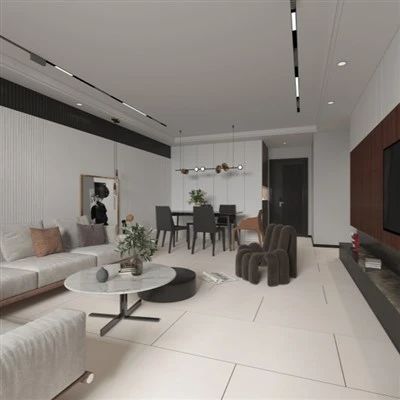
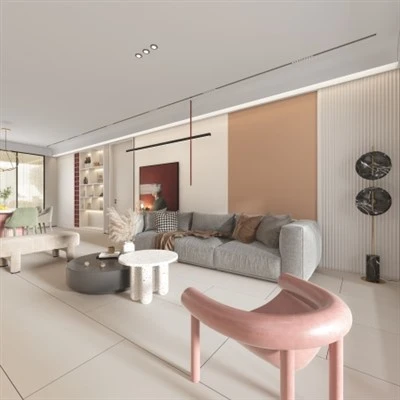
Living and dining rooms typically feature an integrated design, serving as the home's central social area for hosting guests. These shared spaces should embody a clean, sophisticated aesthetic, making overly intricate tile patterns unsuitable. We recommend solid-color light tones like pale gray or beige, which create an airy, upscale ambiance while maintaining timeless appeal.

For compact kitchens, opt for light-colored wall tiles in clean, bright tones to visually expand the space. Since kitchens contain cabinets, countertops, and storage units, choose tile colors that complement these elements-like pairing light gray wall tiles with gray anti-slip flooring for a modern, fresh look. Gray tones are stain-resistant, making them ideal for grease-prone kitchen areas, while beige and white offer versatile neutral options.

Bathrooms, similar to kitchens in size but with higher moisture exposure, require slip-resistant or unglazed tiles for flooring. Opt for light or cool-toned wall tiles-avoid dark colors like black that can make the space feel smaller. Coordinate wall and floor tones (e.g., light gray walls with gray floors) to create a gradient effect that adds visual depth while maintaining harmony.
https://www.jdztile.com/floor-tile/rustic-floor-tile/anti-slip-white-stone-tile.html