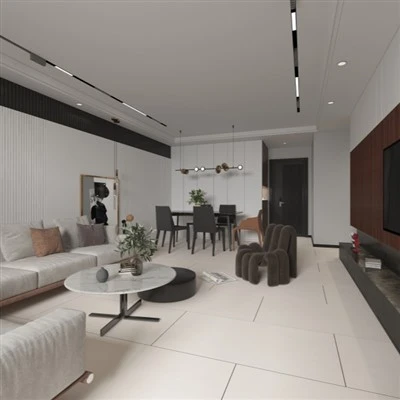
In modern home renovation, the kitchen, as the core area of family life, requires tile selection that not only affects overall aesthetics but also directly impacts safety and ease of cleaning. Faced with a dazzling array of tile products on the market, how can one make an informed choice? This article will provide a detailed analysis from multiple perspectives, including material, functionality, and matching.
I. Special Requirements of the Kitchen Environment for Tiles
The kitchen is a complex environment with high temperatures, high humidity, and frequent grease, which makes tile selection distinct from other spaces such as the living room or bedroom. Most household kitchens are designed as open or semi-open layouts, with areas typically ranging from 6 to 12 square meters, requiring tiles with high-strength protective capabilities.
The kitchen floor is prone to water accumulation and slipperiness, while the walls are susceptible to grease stains. Therefore, the slip resistance, stain resistance, and ease of cleaning of tiles should be primary considerations. According to the latest market analysis, consumer preferences for kitchen tiles have shifted from mere durability to a multi-dimensional integration of stain resistance, ease of cleaning, wear resistance, slip resistance, diverse patterns, and environmental friendliness without formaldehyde.
II. Comparison of Characteristics of Different Tile Materials
1. Glazed Tiles: The Preferred Choice for Kitchen Walls
Glazed tiles have a surface coated with a layer of glass glaze, allowing patterns to mimic stone, wood grain, or geometric abstractions, with a rich variety of colors. They offer high stain resistance (up to grades 4-5), preventing grease from penetrating, and can be cleaned with a simple wipe of a damp cloth. Their low water absorption rate (3%-6%) ensures resistance to acid and alkali corrosion.
It should be noted that the glaze layer is prone to chipping, and frequent collisions with kitchen countertops may cause fine cracks. Matte glazed tiles, while avoiding light pollution, tend to accumulate dust more easily than glossy ones and require frequent wiping in greasy areas.
2. Unglazed Tiles: The "Tough Guy" for Kitchen Floors
Unglazed tiles are uniform throughout, fired as a single piece, with a slip resistance coefficient of 0.7-0.8 and a PEI wear resistance index of ≥600, making them an ideal choice for flooring. Their natural texture realistically replicates the effect of antique stone, and their high strength makes them resistant to breakage, suitable for kitchen environments where heavy objects frequently fall.
The downside of unglazed tiles is their relatively limited color range and less diverse patterns compared to glazed tiles. The micro-pores on their surface can trap dirt, and without regular deep cleaning, bacteria may proliferate.
3. Other Types of Tiles
Polished tiles and vitrified tiles are highly durable (Mohs hardness level 7), wear-resistant, and pressure-resistant, offering a bright and grand visual appeal suitable for modern minimalist kitchens. However, their low slip resistance coefficient (<0.4) makes them prone to slipping when wet and unsuitable for flooring.
Mosaic tiles are known for their small-piece arrangements, making them suitable for decorative use on backsplashes or corners in kitchens. Their patterns are flexible and allow for DIY designs, but the numerous seams are prone to trapping dust and dirt, making cleaning time-consuming.
Antique tiles have a strong texture, saturated colors, and slightly irregularity texture, offering slip resistance and artistic appeal. However, their high water absorption rate (8%-10%) makes them prone to color penetration. They are suitable as local accents in Chinese- or European-style kitchens.
III. Key Points for Selecting Kitchen Tiles
1. Size Selection: Clever Tricks for Small Spaces
Small kitchen spaces are better suited for 400×800mm size tiles to avoid waste from cutting large tiles. Larger kitchens can experiment with 600×1200mm tiles to create a sense of openness. Common sizes for kitchen floor tiles include 60*60cm, 40*80cm, and 60*120cm.
Small-sized tiles offer greater flexibility in installation, effectively reducing cutting waste, and are particularly suitable for kitchen spaces in modern commercial housing, which are typically around 5 square meters.
2. Color Matching: Creating a Comfortable Visual Experience
The kitchen is a high-temperature working environment, so tile colors should primarily consist of light and cool tones, such as white, light gray, or light green. These colors create a calm and comfortable visual effect, alleviating the fiery feeling brought by open flames.
White tiles make the space appear brighter, cleaner, and more refined, with a full sense of transparency, but they tend to show dirt easily and require frequent cleaning. Gray tiles are versatile, highly stain-resistant, and suitable for modern minimalist kitchens. Avoid using borders, as they can make the space appear cluttered and disrupt the overall effect.
3. Performance Indicators: Technical Parameters That Cannot Be Ignored
Slip resistance is a core indicator for kitchen floor tiles. Choose tiles with a slip resistance coefficient (R-value) of R10 or higher and a friction coefficient of ≥0.5. In terms of wear resistance, tiles should have a Mohs hardness of at least level 6 and a PEI wear resistance index of ≥300.
Environmental standards should also not be overlooked. National standards require tile radioactivity to be ≤ level 1.0 and formaldehyde emissions to be ≤0.124mg/m³. For water absorption, wall tiles can have a water absorption rate of up to 10%, which aids adhesion, while floor tiles should have a water absorption rate of ≤0.5% to prevent moisture penetration and mold growth.
IV. Installation and Maintenance Recommendations
Installation is a key factor in ensuring the longevity of tiles. It is recommended to use tile adhesive instead of cement, as it offers stronger bonding and effectively prevents hollowing. Leave gaps of 2-3mm and fill them with grout to prevent dark seams from forming.
For daily maintenance, use a soft brush to remove dust. Grease stains can be wiped with warm water and dish soap, avoiding acidic or alkaline cleaners. Waxing every six months can effectively waterproof and stain-proof tiles. For deep cleaning of matte tiles, a mixture of baking soda and hydrogen peroxide can be used.
Choosing the right kitchen tiles is a crucial step in creating an ideal cooking space. Remember the three principles: practicality, durability, and environmental friendliness. By combining the actual needs of your family with the characteristics of your kitchen, you can certainly select kitchen tiles that are both beautiful and practical, making cooking a true pleasure.