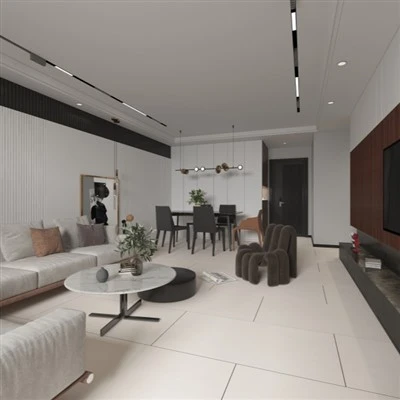
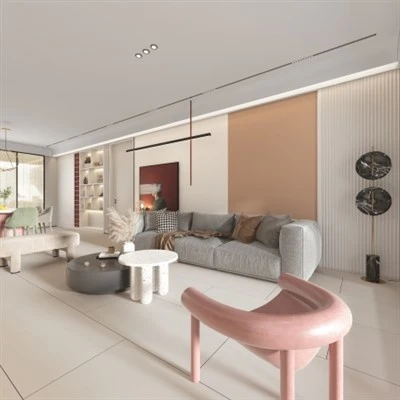
First Impressions Start from the Floor
The living room is the face of your home – and the floor tiles you choose set the tone for the entire space. But with so many options on the market, it's easy to feel overwhelmed. Don't worry – this 5-minute guide walks you through the key decision points so you can choose with confidence and avoid costly mistakes.
Step 1: Material – Glossy or Satin/Matte?
This is the first big decision. Here's a quick breakdown:
Glossy tiles – High shine makes spaces feel bright and expansive. Ideal for well-lit homes that favour a luxurious look. The downsides: glare can be an issue, and they show dust and footprints easily.
Satin/Matte tiles – Warm, soft surface with no light pollution, better slip resistance, and they hide dirt well. If you have underfloor heating, children, or elderly family members, matte tiles are the safer, more practical choice.
Step 2: Size – 800×800mm or 750×1500mm?
Standard homes (80–120 sqm) – 800×800mm tiles offer the best value for money, with lower installation costs. For a more spacious feel, go with seamless installation and skip the threshold strips.
Large homes (120+ sqm) – 750×1500mm large-format slabs are the way to go. Fewer grout lines, stronger visual extension, and a more impressive overall effect. Note: installation costs are higher, so confirm this with your tiler upfront.
Step 3: Glaze & Body Quality
Glazed tiles – Rich in patterns and highly stain-resistant – the mainstream choice. Run your fingers across the glaze – it should feel smooth and refined.
Full-body tiles – The body colour matches the surface, so even after beveling or edge-cutting, no white body shows. Ideal for areas requiring detailed cuts, such as feature walls.
Step 4: Check the "ID Card" – Test Reports Matter
Always ask for the quality inspection report and check the water absorption rate.
Water absorption below 0.5% – This is porcelain tile (fully vitrified), meaning high hardness and excellent stain resistance – the right choice for living room floors.
Flatness test – Place two tiles face-to-face. The smaller and more uniform the gap, the better the flatness.
Final Tips
If you're on a budget, invest more in floor tiles – wall tiles are a good place to save. Also, take a few samples home and view them under your natural daylight. What you see online often looks different in person.