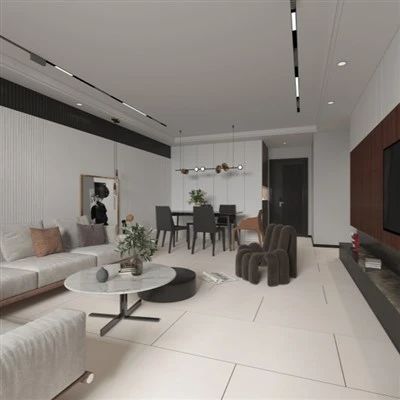
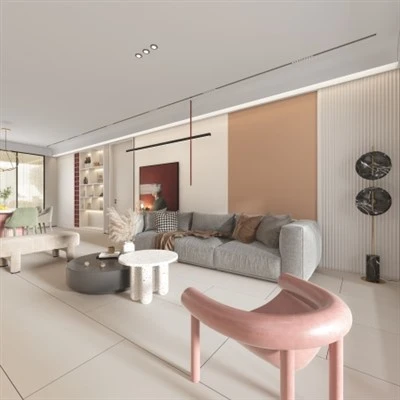
In today's pursuit of a natural, rustic, and serene aesthetic for living, the selection of home decor materials increasingly emphasizes the essence of the material and its emotional expression. As the preciousness and scarcity of natural stone become limiting factors, a material that combines natural charm with modern practicality – the Limestone series of tiles – is quietly becoming a favorite among designers and homeowners. It is not merely a floor covering but also a geological epic spanning hundreds of millions of years, infusing modern spaces with an enduring and warm texture.
What is Limestone? Tracing the Sedimentation of Time
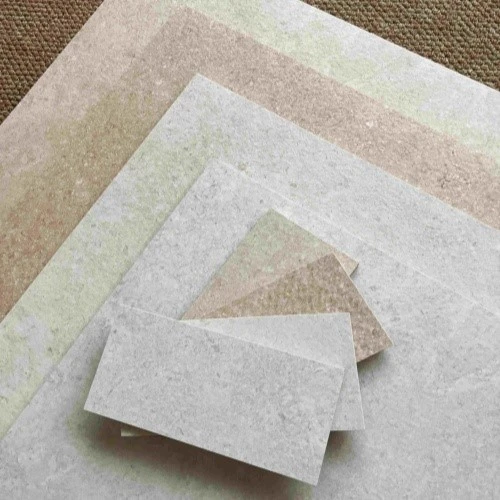
Limestone does not refer to a specific type of stone, but rather is a general term for a category of beige-colored carbonate rocks (primarily composed of limestone). It was formed over millions or even hundreds of millions of years through the deposition and compaction of marine organism remains such as shells and corals. It is named "Limestone" because its main components are similar to the building stone abundant in the Loire Valley region of France.
This stone inherently carries a sense of understated luxury. Its colors are soft, commonly found in earth tones like off-white, light gray, beige, and light brown. The texture is warm and smooth, with natural and fluid veins, as if imbued with the warmth of sunlight and time. Historically, many European castles, churches, and palaces were built with limestone, giving it a profound cultural heritage and a sense of historical sedimentation.
The Perfect Fusion of Natural Aesthetics and Modern Craftsmanship
While genuine natural limestone possesses unique charm, it has drawbacks such as relatively high porosity, susceptibility to staining, requiring regular maintenance, and being expensive. Limestone series tiles are precisely a tribute to and sublimation of natural beauty through modern ceramic technology.
Utilizing advanced techniques like digital inkjet printing, precision engraving molds, and dry grain semi-polishing, they accurately replicate the color, texture, and feel of natural limestone. Their advantages are evident:
High Fidelity
The tile surface not only recreates the rich color layers and subtle fossil traces of limestone but also uses mold technology to create a realistic, uneven tactile sensation, as if touching the weathered surface of ancient stone.
01
Excellent Physical Properties
Compared to natural stone, limestone tiles possess higher hardness, wear resistance, and flexural strength. They are dense and non-porous, waterproof, stain-resistant, and resistant to acids and alkalis, making cleaning and maintenance extremely easy. They are highly suitable for high-traffic areas like living rooms, kitchens, bathrooms, and balconies.
02
Stable Quality and Diversity
Industrial production ensures consistency in color and texture, facilitating large-area installation and avoiding the color variation issues common with natural stone. Simultaneously, they are offered in various sizes and surface finishes (matte, soft sheen, semi-polished) to meet different design needs.
03
Eco-friendly and Economical
Quarrying natural stone consumes natural resources, whereas limestone tiles are more environmentally friendly. Their price is also significantly lower than high-quality natural limestone, allowing more people to affordably acquire this elegance derived from nature.
04
Spatial Application: Creating a Serene and Soothing Ambiance
The low saturation colors and natural texture of limestone tiles make them an ideal choice for creating tranquil and warm spaces.
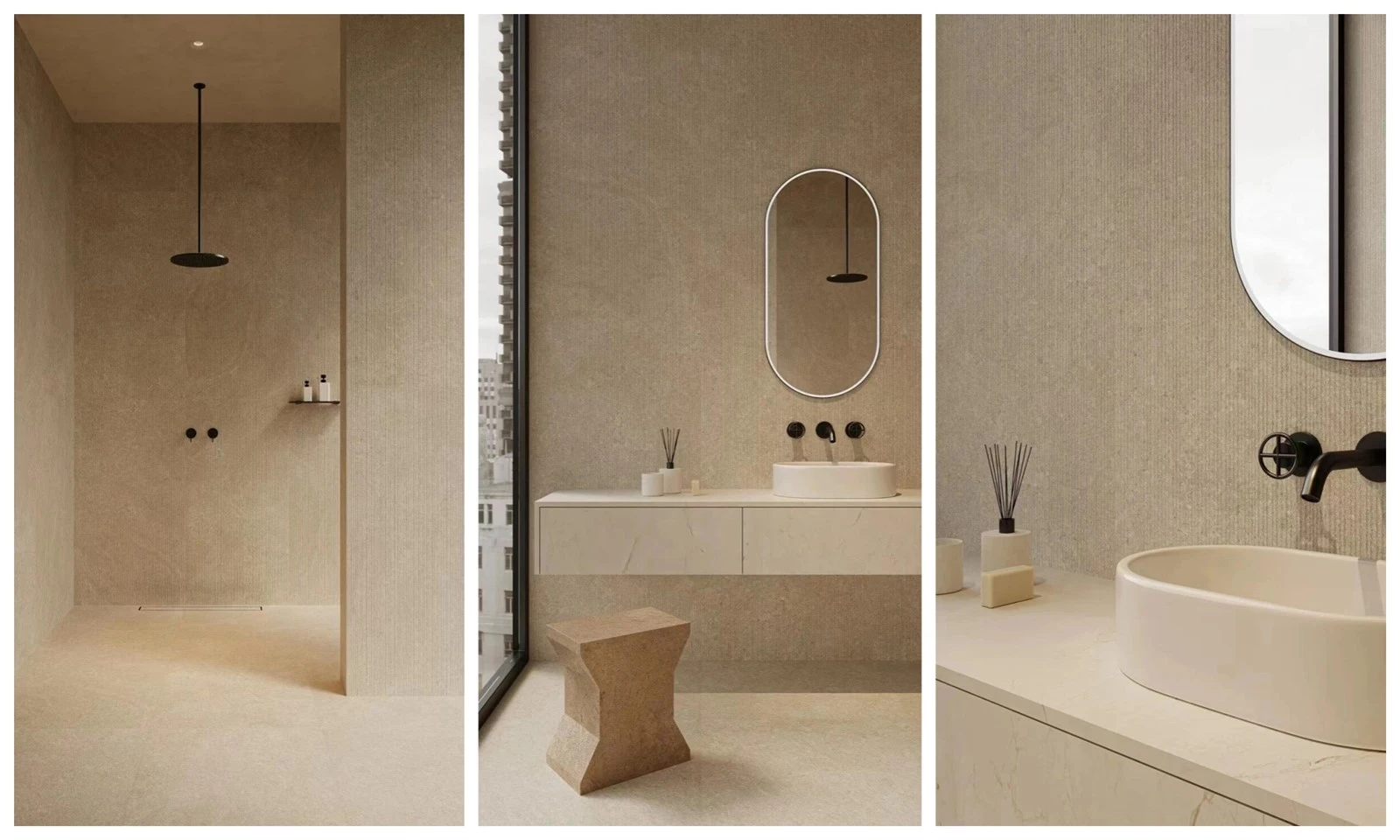
Wabi-Sabi and Minimalism: Their rustic, imperfect beauty aligns perfectly with the core philosophy of Wabi-Sabi. Large-area installation can create a cohesive spatial feeling, allowing light and shadow to dance freely on the subtle textures, fostering a quiet and healing atmosphere.
Modern Minimalism and Creamy Style: Choosing off-white or light gray tiles can easily establish a warm, soft tone for the space. Paired with wooden elements and cotton-linen textiles, they collectively build a comfortable and cozy home environment.
French and Mediterranean Styles: Directly echoing the historical origins of limestone, they bring a touch of romantic Southern European flair and vintage charm to the space.
Commercial Spaces: In commercial spaces such as hotels, cafes, and showrooms,this tiles can convey an understated, elegant, and trustworthy brand character.
Conclusion
Limestone tiles are translators of time and the wise choice for modern living. They skillfully transform the weight of history into a lightness and practicality suited for contemporary life, allowing the home to become a haven in the bustling city where one can touch nature and settle the mind. Choosing this tiles is not just selecting a material; it is choosing a lifestyle attitude that returns to authenticity and embraces tranquil profundity. When feet tread upon the warm tile surface, it's as if one can feel the gentle echo of that warm sea from billions of years ago.