Innovation-Driven Green Transformation:
Ceramic Tile Industry Embraces New Opportunities for High-Quality Development
Recently, with the deepening of national environmental policies and the trend of consumption upgrading, China's ceramic tile industry is undergoing a new round of industrial transformation. Intelligent manufacturing, green production, and personalized customization have become core keywords for industry development. Leading enterprises are actively addressing market challenges and exploring new growth opportunities through technological innovation and business model upgrades.

Strengthened Environmental Policies: Green Manufacturing Becomes Mainstream
Driven by the "Dual Carbon" goals, the ceramic tile industry is accelerating its transition toward green and low-carbon practices. A number of leading companies have taken the initiative to introduce photovoltaic power generation and waste heat recovery systems, while widely using renewable raw materials to significantly reduce energy consumption and emissions during production. Additionally, the application of environmentally friendly materials such as water-based glazes and formaldehyde-free adhesives has increased markedly. More companies have obtained national green product certifications, achieving low-carbon management throughout the product lifecycle. In the first half of this year, the industry's average energy consumption per unit decreased by 7.2% year-on-year, reflecting continuous progress in green manufacturing.

Intelligent Manufacturing Empowerment: Flexible Production Lines Meet Diverse Needs
In response to the growing demand for personalized and small-batch orders, many ceramic enterprises have increased their investment in digitalization, introducing AI visual inspection systems, smart warehouses, and automated logistics. By establishing industrial internet platforms, they have achieved end-to-end control from raw material formulation to firing processes, improving product consistency while shortening delivery cycles. To date, dozens of smart demonstration factories have been built in the industry, capable of flexibly meeting market demands for various categories and specifications such as stone-like, wood-like, and sintered stone products, thereby enhancing supply-demand matching efficiency.

Design Upgrades and Functional Expansion Drive Product Iteration
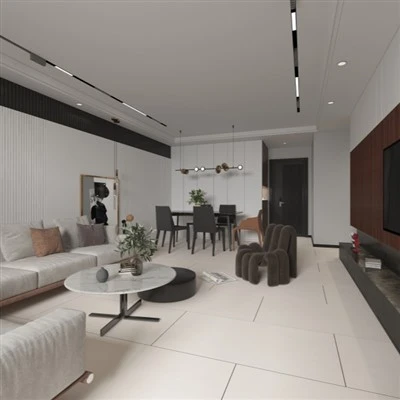
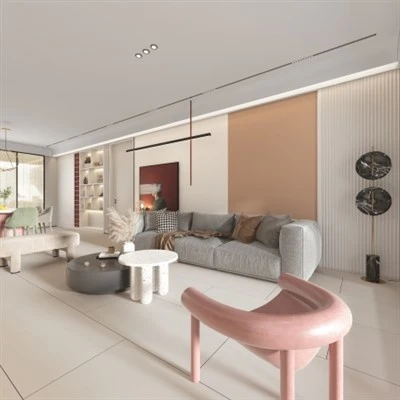
Today, ceramic tile products are transitioning from traditional paving materials to integrated spatial decoration solutions. Functional products such as large-format sintered stone, translucent tiles, and heated tiles are performing actively in the market and are increasingly being applied in various scenarios, including homes, commercial spaces, and outdoor areas. At the same time, brands are placing greater emphasis on design and aesthetic expression, strengthening collaborations with international design institutions and renowned designers to enhance product added value.
Conclusion
The ceramic tile industry is at a critical stage of transformation and upgrading. Driven by both policy and market forces, the future is expected to see more outstanding enterprises with core competitiveness in technology, sustainability, and design, promoting high-quality and sustainable development in the industry.
https://www.jdztile.com/floor-tile/ceramic-floor-tile/grey-porcelain-bathroom-floor-tile.html