Introduction
Floor tiles are an important material choice in residential developments, commercial buildings, hotels, and public facilities. For importers, distributors, contractors, and project developers, selecting suitable floor tiles involves more than appearance. Product specifications, surface finishes, dimensional consistency, durability, and supply capacity all influence purchasing decisions and project performance.
As international demand for different tile designs and specifications continues to develop, buyers are paying closer attention to the manufacturing quality and practical applications of ceramic and porcelain floor tiles. Understanding these factors helps businesses select products that meet project requirements while maintaining consistent standards across large orders.
1. Different Types of Floor Tiles for Various Applications
Floor tiles are available in different materials, production processes, and surface treatments. Each type has specific characteristics that determine its suitability for different environments.
Porcelain floor tiles are widely used in commercial and residential projects because of their low water absorption, structural strength, and resistance to everyday wear. They are suitable for areas with frequent foot traffic, including shopping centers, hotels, offices, and residential buildings.
Ceramic floor tiles offer flexibility in design and size. They are commonly selected for residential interiors and certain commercial applications where decorative appearance and practical maintenance are important considerations.
Glazed floor tiles feature a protective surface layer that allows manufacturers to produce various colors, patterns, and textures. They can imitate natural materials such as marble, stone, and wood while providing a consistent manufactured finish.
For distributors and importers, understanding the differences between these categories is important when developing product collections for different markets.
2. Surface Finishes and Their Influence on Floor Tile Selection
Surface finish is one of the main factors affecting the appearance and practical performance of floor tiles. Different finishes can create distinct visual effects even when the basic material and color remain similar.
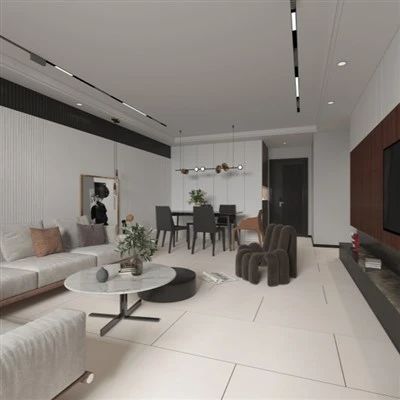
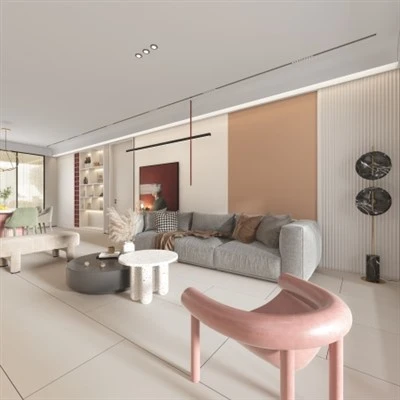
Polished floor tiles have a smooth, reflective surface that helps create a brighter interior appearance. They are frequently used in living rooms, hotel lobbies, showrooms, and other interior spaces where a clean and spacious visual effect is required.
Matte floor tiles provide a softer appearance with limited reflection. Their understated surface makes them suitable for modern residential interiors, offices, and commercial environments. Depending on the surface treatment, matte finishes can also provide different levels of slip resistance.
Textured floor tiles are designed with surface variations that resemble natural stone, concrete, or other materials. These finishes add visual depth and can be considered for projects requiring a more natural or distinctive appearance.
When selecting a surface finish, buyers should consider the intended installation area, cleaning requirements, lighting conditions, and applicable slip-resistance standards. A finish suitable for a living room may not necessarily be appropriate for a wet commercial environment.
3. Popular Designs in the International Floor Tile Market
Floor tile designs continue to evolve alongside changes in architectural styles and interior design preferences. For international distributors, maintaining a balanced product range is often more practical than focusing on a single decorative trend.
Marble-look floor tiles remain an important category in residential and commercial interiors. Their printed patterns reproduce the appearance of natural marble, including soft veins, contrasting textures, and different background colors. White, beige, and grey marble-look designs are commonly considered for hotels, apartments, and office projects.
Wood-look floor tiles combine the visual characteristics of timber with the practical properties of ceramic materials. Their plank-shaped formats and wood grain patterns make them suitable for bedrooms, living areas, hotel interiors, and selected commercial spaces.
Stone-look floor tiles reproduce the natural variations of stone surfaces. Grey, beige, and earthy colors are often used in contemporary architectural projects because they coordinate with different wall materials and furniture styles.
Concrete-look floor tiles are another option for modern commercial and residential spaces. Their relatively simple patterns and neutral colors work well with minimalist, industrial, and contemporary design concepts.
Large-format floor tiles are also receiving attention in architectural projects. Formats such as 600×1200 mm and 750×1500 mm can reduce the number of visible joints when installed correctly, creating a more continuous floor appearance.
4. How Tile Size Affects Project Planning
Tile dimensions influence both the visual result and the installation process. Different project types require different sizes depending on room dimensions, design requirements, and construction conditions.
Small and medium-sized tiles are frequently used in residential renovations, bathrooms, and spaces with more complicated layouts. Their dimensions allow installers to work around corners, drainage areas, and irregular floor structures.
Larger floor tiles are commonly considered for hotel lobbies, shopping areas, apartment developments, and spacious residential interiors. They can create a more uniform visual effect, although installation requires suitable substrate preparation and professional handling.
For wholesale buyers, standardizing tile sizes within a product collection can simplify inventory management and distribution. When purchasing large quantities, dimensional consistency between batches is particularly important.
Manufacturers should maintain appropriate control over length, width, thickness, flatness, and other dimensional specifications. These details influence installation accuracy and the overall appearance of completed projects.
Before placing an order, buyers should confirm the available dimensions, thickness options, packaging specifications, and production tolerances.
5. Technical Quality Requirements for Floor Tiles
Appearance is important, but technical quality remains a central consideration when selecting floor tiles for commercial distribution and construction projects.
Water absorption is one of the key indicators used to classify ceramic products. Porcelain tiles generally have a water absorption rate of 0.5% or less under the relevant testing standards. This characteristic makes them suitable for applications where low water absorption is required.
Wear resistance is another consideration, particularly for commercial spaces with frequent pedestrian traffic. Buyers should check the applicable abrasion classification and product testing information to ensure that the selected tile meets the intended usage requirements.
Slip resistance should also be evaluated according to the installation environment. Areas exposed to water, such as bathrooms, entrances, and certain public facilities, may require specific surface performance. Buyers should request relevant test reports rather than relying only on descriptions such as matte or textured.
In addition, color consistency, surface defects, edge quality, and flatness should be checked during production and inspection. Consistent quality is especially important for projects involving multiple containers or repeat orders.
For international buyers, requesting technical specifications and inspection records before shipment can help reduce uncertainty during product selection.
6. Factors Importers Should Consider When Purchasing Floor Tiles
Importing floor tiles involves several considerations beyond the unit price. Product selection, manufacturing capacity, packaging, shipping arrangements, and communication all influence the purchasing process.
First, buyers should define their target market and intended applications. Different countries may have different preferences regarding tile sizes, colors, surface finishes, and technical standards. A product range suitable for residential distributors may differ from one designed for large construction projects.
Second, product availability and production schedules should be confirmed. Stock products and made-to-order products may have different delivery arrangements. For wholesale purchases, buyers should understand the expected production lead time and whether repeat orders can maintain consistent specifications.
Third, packaging should be evaluated carefully. Floor tiles are heavy and fragile products, so suitable cartons, internal protection, pallet arrangements, and container loading methods are important for international transportation.
Buyers should also confirm carton labeling, product identification, quantity per carton, and total loading capacity. Clear packaging information helps simplify warehouse operations and inventory management after arrival.
Finally, communication with the manufacturer should cover product specifications, sample confirmation, order quantities, inspection arrangements, and shipment schedules. Clear agreements at the beginning of an order can help prevent misunderstandings during production and delivery.
7. Manufacturing Consistency and Quality Control
For distributors and project buyers, maintaining consistent product quality across large quantities is often more important than evaluating a single sample.
The manufacturing process involves several stages, including raw material preparation, forming, drying, glazing, firing, sorting, and packaging. Each stage can influence the final appearance and technical characteristics of the finished product.
Raw material composition affects the physical properties of ceramic and porcelain tiles. Forming and drying processes influence dimensions and structural stability, while firing conditions play an important role in the final strength and water absorption characteristics.
Surface decoration and glazing require additional attention because differences in printing, glaze application, and production conditions may lead to variations in color or pattern.
Quality inspection should therefore cover both appearance and technical specifications. For large orders, buyers may also request batch inspections to check whether delivered products meet the agreed requirements.
A reliable manufacturing process helps reduce unnecessary variations and supports more stable product supply for distributors, importers, and construction projects.
8. The Role of Chinese Floor Tile Manufacturers in Global Supply
China remains an important source of ceramic and porcelain tiles for international markets. Its established ceramic manufacturing industry provides a wide selection of product designs, dimensions, surface finishes, and production options.
Zibo, located in Shandong Province, has a long-established ceramic industry and a developed network of related manufacturing businesses. This industrial background provides a foundation for ceramic production, product development, and export activities.
For overseas buyers, working with a China floor tile manufacturer can provide access to different product categories and specifications within one sourcing market. However, manufacturers should be evaluated according to their actual production capabilities, quality control procedures, export experience, and ability to meet order requirements.
Buyers should not base supplier selection entirely on price. Product consistency, communication efficiency, production arrangements, and packaging standards are also important factors in establishing long-term supply relationships.
For businesses handling wholesale distribution or construction projects, a stable manufacturing partnership can help simplify product sourcing and support future purchasing plans.
9. Future Considerations for Floor Tile Product Development
The international floor tile market is influenced by architectural design, construction practices, and changing buyer requirements. Several areas are worth monitoring when planning future product collections.
Neutral colors, natural stone patterns, wood-inspired surfaces, and understated matte finishes continue to provide flexible options for different interior styles. At the same time, large-format products offer additional possibilities for commercial and residential projects.
Manufacturers are also paying attention to production efficiency, material utilization, and quality inspection. These factors influence manufacturing stability and the ability to meet different order requirements.
For international distributors, product development should be based on a combination of market demand, technical performance, and purchasing feedback. Rather than introducing too many similar designs, maintaining a clear product structure with different sizes, finishes, and application categories may make inventory planning more manageable.
Conclusion
Selecting suitable floor tiles requires consideration of design, material properties, dimensions, surface finishes, and manufacturing quality. For importers, distributors, contractors, and project developers, these factors directly influence purchasing decisions and the practical performance of completed installations.
As an established ceramic production area, Zibo offers access to a range of tile manufacturing resources and export-oriented supply capabilities. When evaluating a floor tile manufacturer, overseas buyers should pay attention to product specifications, quality consistency, production arrangements, and international packaging requirements.
A clear understanding of these factors can help businesses build more efficient sourcing strategies and establish stable supply relationships in the international ceramic tile market.

China Ceramic Tile Manufacturer
Golden State Ceramics has been deeply rooted in the ceramic industry for nearly two decades, collaborating with clients from over 50 countries to provide tailored ceramic tile solutions for diverse regional markets. In recent years, we have remained committed to staying ahead of market trends, developing more competitive products to meet the evolving needs of our global clientele.