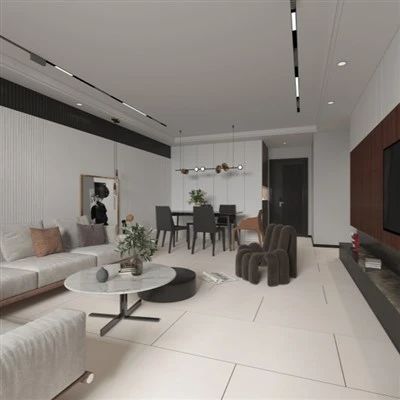
For overseas buyers, choosing a reliable China tile manufacturer is an important step when sourcing products for distributors, importers, contractors, developers, and commercial projects. Beyond tile appearance, buyers need to consider product quality, production capacity, specifications, packaging, lead time, customization, and export experience. A suitable supplier should be able to provide stable products and consistent service throughout the purchasing process.
What Overseas Buyers Should Check Before Ordering Tiles
When sourcing tiles from China, buyers often compare several suppliers before requesting quotations. Price is important, but it should not be the only consideration. A lower unit price may not provide the best overall purchasing value if product quality, packaging, or delivery performance is inconsistent.
A professional China tile manufacturer should provide clear product information, including tile type, size, thickness, surface finish, water absorption, application area, available colors, and packing details. Complete specifications help buyers evaluate whether a product is suitable for residential, commercial, hospitality, or other construction projects.
For distributors and importers, product consistency is particularly important. Once a product is introduced to a local market, repeated orders may be required. Stable production standards can help reduce differences between different batches and support long-term product supply.
Production Capacity Matters for B2B Tile Purchasing
B2B tile orders are usually different from retail purchases. Importers and distributors may require several containers or regular shipments rather than a small quantity of products. Therefore, production capacity should be considered before placing an order.
A capable factory should have an organized production process covering raw materials, forming, glazing or surface treatment, firing, sorting, inspection, and packaging. Stable production management helps maintain product quality when handling larger orders.
Buyers should also ask about production lead times. For standard products, a factory should be able to provide a realistic production schedule according to order quantity and current production arrangements. For customized products, additional time may be required for color development, surface design, packaging, or other specifications.
Clear communication about production time can help overseas buyers plan shipping and inventory more efficiently.
Product Range for Different Projects
A supplier with a broad product range can be more convenient for B2B buyers who need different tile categories for one project or market.
Common categories include porcelain floor tiles, wall tiles, marble-look tiles, wood-look tiles, matte tiles, polished tiles, stone-effect tiles, and large-format tiles. Different sizes and surface finishes can meet different architectural and interior design requirements.
For example, marble-look porcelain tiles can provide a natural stone appearance while offering the practical characteristics expected from porcelain products. Wood-look tiles can be used where buyers want a wood-inspired design with the durability and maintenance advantages of tile.
For distributors, having multiple product categories can also make it easier to develop different collections for different customer groups.
Quality Control and Product Consistency
Quality control is one of the most important factors when selecting a tile supplier. Buyers should understand how the manufacturer manages quality during production rather than evaluating products only from photographs.
Quality inspection may cover dimensions, flatness, color consistency, surface defects, glaze quality, and other product requirements. For export orders, appropriate inspection and sorting procedures can help reduce quality-related problems after shipment.
Color consistency is especially important for large projects. If tiles from different production batches have noticeable differences, installation results may be affected. Buyers should therefore communicate clearly about batch requirements and confirm samples before mass production when necessary.
For long-term cooperation, consistent quality is often more important than a single low-price quotation.
Packaging and Container Loading
Export packaging is another factor that should not be overlooked. Tiles are heavy and fragile products, so packaging must be suitable for long-distance transportation.
A professional supplier should use appropriate cartons and protective materials according to tile size and product characteristics. For export orders, buyers should also confirm carton markings, pallet requirements, container loading methods, and other shipping details before production.
Efficient container loading can help make better use of available space while maintaining product protection. Buyers should communicate their requirements in advance, especially when ordering multiple tile sizes or collections in the same shipment.
Clear packaging information can also help importers manage warehouse operations after receiving the goods.
Custom Tile Solutions for Commercial Projects
Architects, developers, and project contractors may require more than standard products. They may need specific sizes, colors, finishes, patterns, or packaging according to project requirements.
For these buyers, it is useful to work with a manufacturer that can discuss customization requirements directly with the production team. Before confirming a customized order, buyers should clarify the required specifications, minimum order quantity, sample approval process, production time, and packaging requirements.
Customization can be particularly useful for hotel projects, residential developments, commercial buildings, and distributor-exclusive collections.
However, buyers should confirm all technical details before mass production to reduce the possibility of misunderstandings between design requirements and finished products.
Why Factory-Direct Sourcing Can Be Useful
Working directly with a factory can provide overseas buyers with a clearer communication process. Instead of relying on several intermediaries, buyers can communicate product specifications, quantities, packaging requirements, and delivery schedules more directly.
For importers and distributors, factory-direct sourcing can also support larger-volume purchasing and long-term cooperation. Product selection, quotation, production arrangements, and order follow-up can be handled through a more direct supplier relationship.
This does not mean every factory is suitable for every buyer. Buyers should still evaluate manufacturing experience, product quality, export capability, communication efficiency, and order management before establishing cooperation.
What Information Should Buyers Request?
Before requesting a quotation, overseas buyers can prepare several key details:
Tile category and intended application
Required size and surface finish
Estimated order quantity
Preferred color or design
Packaging requirements
Destination port or country
Required delivery schedule
Customization requirements, if applicable
Providing this information allows a manufacturer to prepare a more accurate quotation and production plan.
For large projects, buyers can also provide drawings, product specifications, reference images, or project requirements. This helps the factory understand the application and recommend suitable products.
Building Long-Term Cooperation with a Tile Factory
For B2B buyers, the first order is often only the beginning of a supplier relationship. Distributors and importers may need repeated shipments, new designs, replacement products, and ongoing technical communication.
A reliable supplier should therefore focus not only on completing one order but also on maintaining consistent product quality and communication over time.
For overseas buyers sourcing from China, factors such as production capability, quality control, product range, packaging, lead time, customization, and export experience should all be considered together.
Conclusion
Selecting a suitable China tile manufacturer requires more than comparing product prices. Overseas B2B buyers should evaluate the manufacturer's production capability, product consistency, quality control, packaging, customization options, lead times, and export service.
For importers, distributors, architects, developers, and contractors, a supplier that understands international purchasing requirements can make the sourcing process more efficient. Clear specifications, realistic production schedules, reliable quality control, and direct communication can provide a stronger foundation for long-term cooperation.
As a tile manufacturing base in Zibo, China, we focus on supplying porcelain and ceramic tile products for overseas markets, supporting different product specifications, project requirements, and bulk orders.

China Ceramic Tile Manufacturer
Golden State Ceramics has been deeply rooted in the ceramic industry for nearly two decades, collaborating with clients from over 50 countries to provide tailored ceramic tile solutions for diverse regional markets. In recent years, we have remained committed to staying ahead of market trends, developing more competitive products to meet the evolving needs of our global clientele.