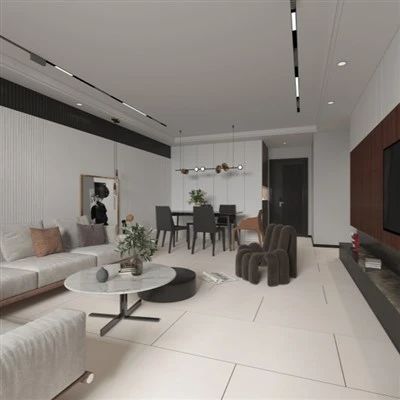
In the field of construction and decoration, white tiles are widely used in indoor and outdoor wall and floor decoration because of their simplicity and elegance. However, to ensure that the paving effect of white tiles meets expectations, the construction standards must be strictly followed. This article will introduce the construction points of white tiles in detail from the aspects of base treatment, tile selection, paving process and acceptance standards.
First of all, base treatment is the basic link of white tile construction. The wall or floor must be flat and solid, without hollows, cracks and other problems. Before construction, dust, oil and other impurities on the surface of the base must be cleaned and moistened with water, but no water accumulation. For uneven bases, cement mortar should be used for leveling to ensure the flatness of subsequent paving.
Secondly, the choice of tiles is crucial. The color, size and water absorption rate of white tiles must meet national standards. High-quality tiles should have no obvious color difference, no cracks, no missing corners, and the size error should be controlled within ±0.5 mm. In addition, the water absorption rate needs to be selected according to the use environment. Wall tiles usually require a water absorption rate of less than 10%, while floor tiles need to be lower to ensure stability after paving.
In terms of paving technology, the construction of white tiles requires the use of special tile glue or cement mortar. Before paving, the tiles need to be soaked for more than 2 hours to avoid hollowing caused by excessive water absorption. When paving, the tiles should be tapped with a rubber hammer to ensure that they fit tightly with the base layer, and the flatness should be checked with a level ruler. The gap width is generally 1-3 mm to avoid cracking of tiles due to thermal expansion and contraction.
Finally, the acceptance standard is the key to ensuring construction quality. After paving, it is necessary to check whether the surface of the tile is flat, without hollows or staggered joints. The hollowing rate should be less than 5%, and the hollowing area of a single tile should not exceed 15%. In addition, the joints should be uniform, without obvious height differences, and the overall effect should meet the design requirements.
The construction standard of white tiles is directly related to the decorative effect and service life. Only by strictly following the construction specifications can we ensure that the tiles are laid firmly and beautifully to meet customer needs.